
Health Policy & Systems
Assessing Core Capacity and Operations of Selected Vietnamese International Border Gates against International Health Regulations Requirements (IHR 2005)
Assessing core health quarantine system capacity at 10 international border gates against the International Health Regulations (IHR 2005), funded by the World Bank.
Project Overview
- Field: Health Policy & Systems
- Duration: 08 - 10/2019
- Funder: World Bank
- Implementing agency: Center for Environmental and Health Studies (CEHS)
- Location: 10 international border gates of Vietnam (7 designated gates and 3 major gates)
Introduction
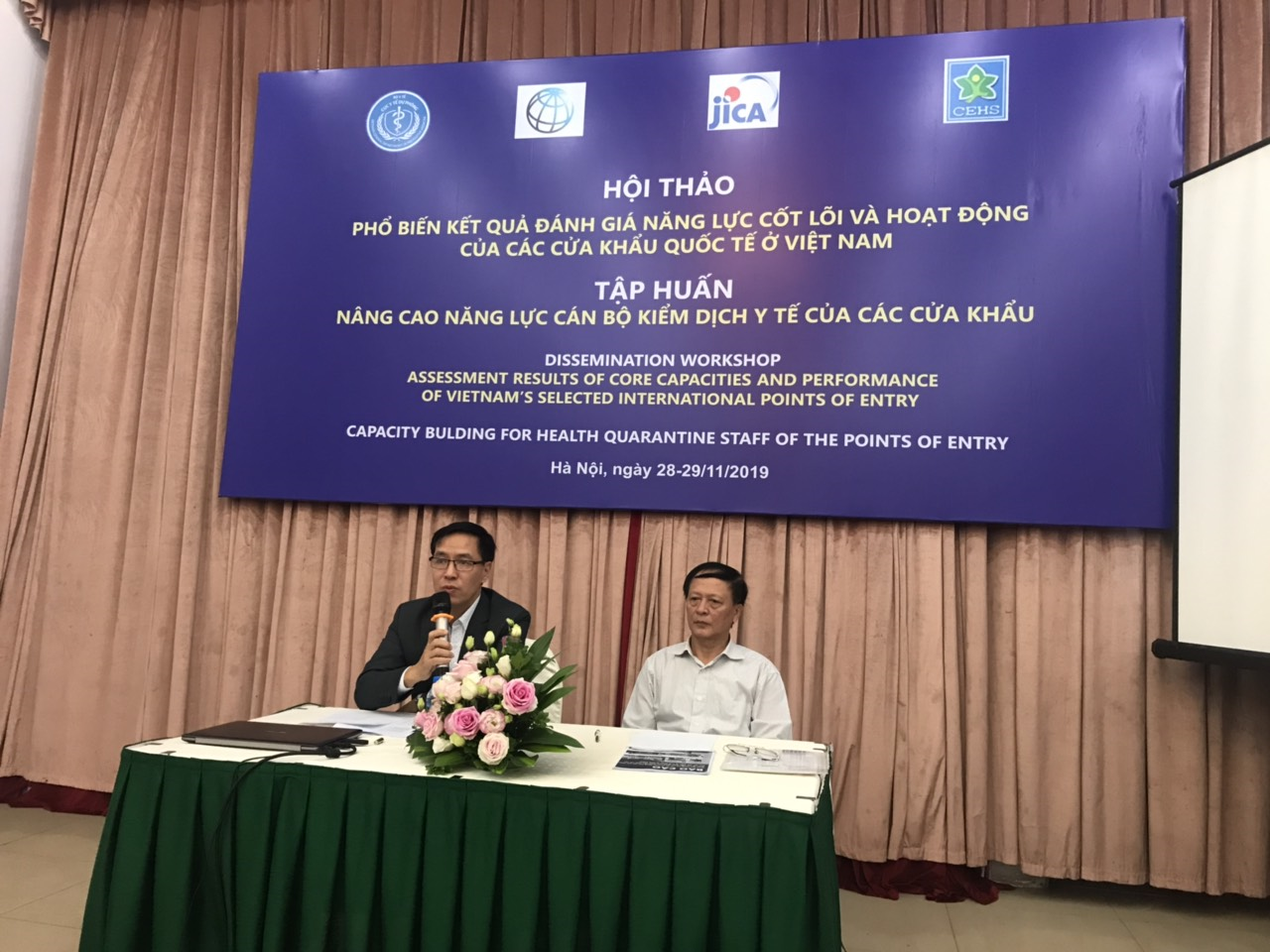
The project "Assessing Core Capacity and Operations of Selected Vietnamese International Border Gates against International Health Regulations Requirements (IHR 2005)" was implemented by CEHS with financial support from the World Bank and technical support from the General Department of Preventive Medicine.
The project comprehensively assessed the core capacity of the health quarantine system at international border gates as required by IHR 2005, focusing on routine capacity, intersectoral coordination capacity, and the ability to respond to Public Health Emergencies of International Concern (PHEIC).
CEHS's Role
CEHS led the independent research and evaluation, responsible for developing the evaluation protocol and methodology, developing the research toolkit, organizing field surveys at border gates, collecting and analyzing quantitative and qualitative data, assessing core capacity against the IHR (2005) framework, and developing the summary report with technical recommendations.
Key Activities
- Reviewing legal documents, technical materials and data on health quarantine operations.
- Conducting field surveys at 10 border gates, 10 International Quarantine Centers/CDCs, and the General Department of Preventive Medicine.
- Assessing infrastructure, equipment and core capacity of border gates against IHR (2005) requirements.
- Interviewing 200 health quarantine officers on knowledge, attitudes and practices (KAP); conducting 62 in-depth interviews with leaders and staff of the health quarantine system at all levels.
- Analyzing data, developing the assessment report, and proposing policy recommendations.
Key Results
- Comprehensively assessed core capacity at 10 international border gates against the IHR 2005 framework, completing a survey of 200 health quarantine officers and 62 in-depth interviews.
- 8 of 10 border gates had developed emergency response plans and 8 of 10 had intersectoral coordination regulations for health quarantine.
- Only 4 of 10 border gates had nearly complete essential infrastructure, while 6 of 10 had less than 50% of items meeting standards; the most lacking were temporary isolation areas, medical treatment rooms, and vehicle/cargo handling areas.
- 94% of staff had been trained in health quarantine and 90% held a quarantine officer certificate, though knowledge of IHR 2005, quarantine procedures and officer responsibilities remained limited.
- Proposed recommendations on infrastructure and equipment investment, workforce training, strengthening intersectoral coordination, and refining policy to improve border health quarantine capacity.