
Environmental Health & Climate Change
Assessing the CERF-Funded WASH Emergency Response
Assessing the CERF-funded WASH emergency response after Typhoon Damrey in 30 communes across Phú Yên, Bình Định and Thừa Thiên Huế provinces.
Project Overview
- Field: Environmental Health & Climate Change
- Duration: 2018
- Funder: Central Emergency Response Fund (CERF)/UNICEF Vietnam
- Implementing agency: Center for Environmental and Health Studies (CEHS)
- Location: 30 communes across 3 provinces — Phú Yên, Bình Định and Thừa Thiên Huế
Introduction
The project assessed the effectiveness and relevance of the CERF-funded water, sanitation and hygiene (WASH) emergency response following Typhoon Damrey and subsequent flooding in affected localities. Alongside assessing effectiveness and responsiveness to residents' needs, the project combined an After-Action Review of efficiency, effectiveness, equity in beneficiary targeting, and sustainability of interventions. The focus was on women, children and vulnerable households in disaster-affected areas.
CEHS's Role
CEHS conducted an independent evaluation of the CERF-funded WASH emergency response and an After-Action Review assessing relevance, effectiveness, efficiency, coverage, equity and sustainability. CEHS collected and analyzed information from local authorities, schools, beneficiary households, UNICEF and WASH technical agencies at the national, provincial and local levels.
Key Activities
- Conducting assessment before and after supply distribution and community communication support.
- Interviewing People's Committee leaders in 30 beneficiary communes and principals of 31 schools; assessing knowledge, attitudes and practices (KAP) of 120 beneficiary household representatives.
- Conducting 104 in-depth interviews with UNICEF staff, NCERWASS, provincial WASH units, local authorities, school staff and students.
- Assessing relevance, effectiveness, efficiency, beneficiary selection and coverage, sustainability of WASH support, and changes in hygiene knowledge and behavior.
Key Results
- The project showed high relevance, meeting affected residents' needs and aligning with government policy; objectives and outputs were completed as planned.
- The actual number of beneficiaries and supplies provided exceeded initial targets, due to savings from competitive procurement and updated needs assessments.
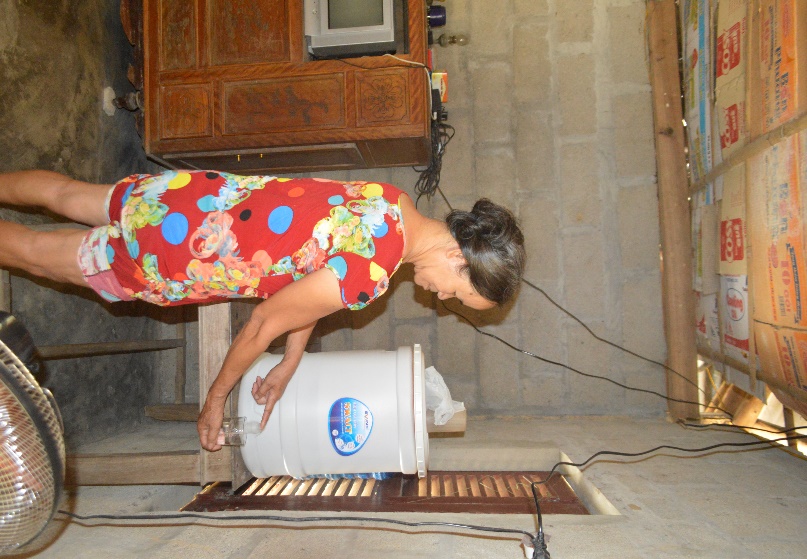
- Support such as household water filters, water tanks and school water filtration systems was assessed as practical, improving access to safe water and strengthening hygiene knowledge and practice.
- Beneficiary selection was assessed as fair, transparent and prioritizing vulnerable groups.
- The project strengthened the capacity of agencies and partners at all levels in planning, implementing, communicating, monitoring and evaluating WASH emergency response, contributing to greater community readiness and resilience for future disasters.