
Research, Evaluation & Technical Assistance
Mid-Term Review of the DISTINCT Project — Disability Integration Services and Therapies Network for Capacity and Treatment
Mid-term review of the DISTINCT early detection and early intervention model for children with disabilities in Tây Ninh, Đồng Nai and Bình Phước, funded by USAID.
Project Overview
- Field: Research, Evaluation & Technical Assistance
- Duration: 03–06/2019
- Funder: USAID
- Implementing agency: Center for Environmental and Health Studies (CEHS)
- Location: 18 communes across 6 districts in 3 provinces — Tây Ninh, Đồng Nai and Bình Phước
Introduction
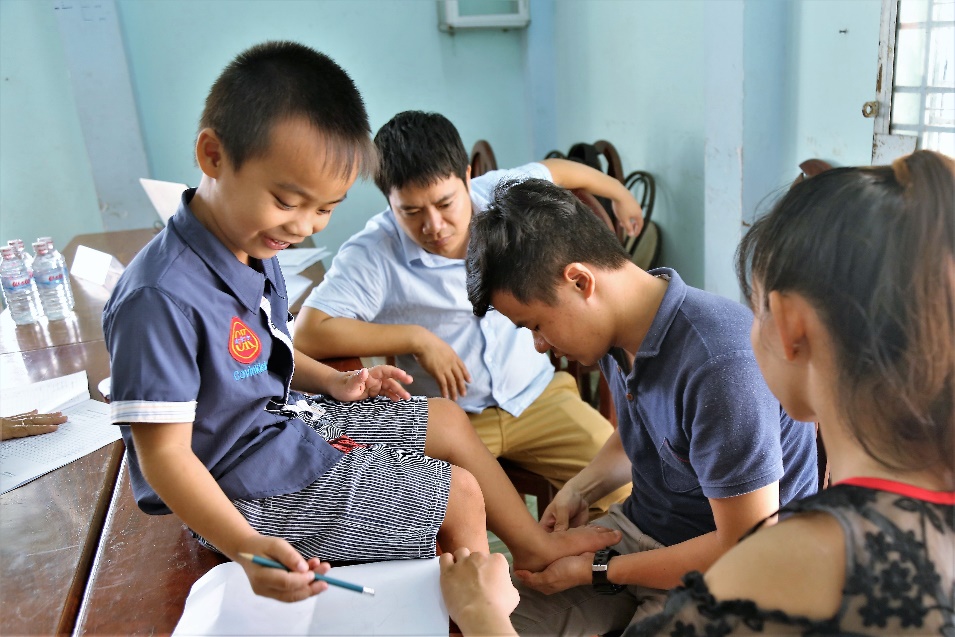
The DISTINCT project implemented an Early Childhood Disability Detection and Intervention (ECDDI) model for children under 6, strengthening the ability to detect, assess, diagnose and provide appropriate intervention services for children with disabilities in the community. The model followed three steps — community screening; examination, assessment and diagnosis; and intervention — with coordination across the health, education and labor/social affairs sectors.
CEHS's Role
CEHS conducted the project's mid-term review, examining implementation progress, the likelihood of achieving results and objectives, the effectiveness and efficiency of the implementation approach, and identifying adjustments needed to improve effectiveness and sustainability.
Key Activities
- Reviewing project files, documents and data at the Central Project Office and localities.
- Conducting surveys in the 3 project provinces; randomly selecting districts and communes for assessment at the provincial, district and commune levels.
- Collecting quantitative data through interviews with 212 subjects, including commune health workers, social workers, preschool teachers, and parents/caregivers of children with disabilities.
- Conducting 96 in-depth interviews and 12 focus group discussions with project managers, rehabilitation specialists, staff from the health, education and social sectors, and project-trained personnel.
- Analyzing and cross-checking quantitative, qualitative and project data to assess objective achievement, progress, effectiveness, sustainability and scalability of the ECDDI model.
Key Results
- By May 2019, the project had identified 3,026 children with disabilities requiring intervention, of whom 2,012 had received intervention, including 1,094 receiving special education and 918 receiving rehabilitation.
- Over 40% of children receiving intervention had completed their case files, and over half showed clear progress.
- Community screening reached nearly 90% of children aged 0–6 in project areas. Many targets for training doctors, technicians, community health workers and parents were exceeded.
- The project helped raise awareness of ECDDI among authorities, sectors and communities, and strengthened local commitment to sustaining and scaling up the model.